Analyzing conflicts and understanding your own values: two new coaching journals in coachingspace
Why does this conflict keep escalating?
Which interests and needs really stand behind it?
And why is a decision so hard for me, even though the facts actually seem clear?
Coaching and supervision often show: behind a concrete problem lies a more complex dynamic. In conflicts, it is not just different positions that clash. Behind them stand interests, needs, values and sometimes very different ideas of what a good solution would be.
It is similar with personal decisions. People often know what their options are. Yet they get stuck. One reason can be that different values are in conflict with each other, or that a person's actions do not match the values they actually consider important.
For structured work on exactly these topics, there are now two new journals in coachingspace:
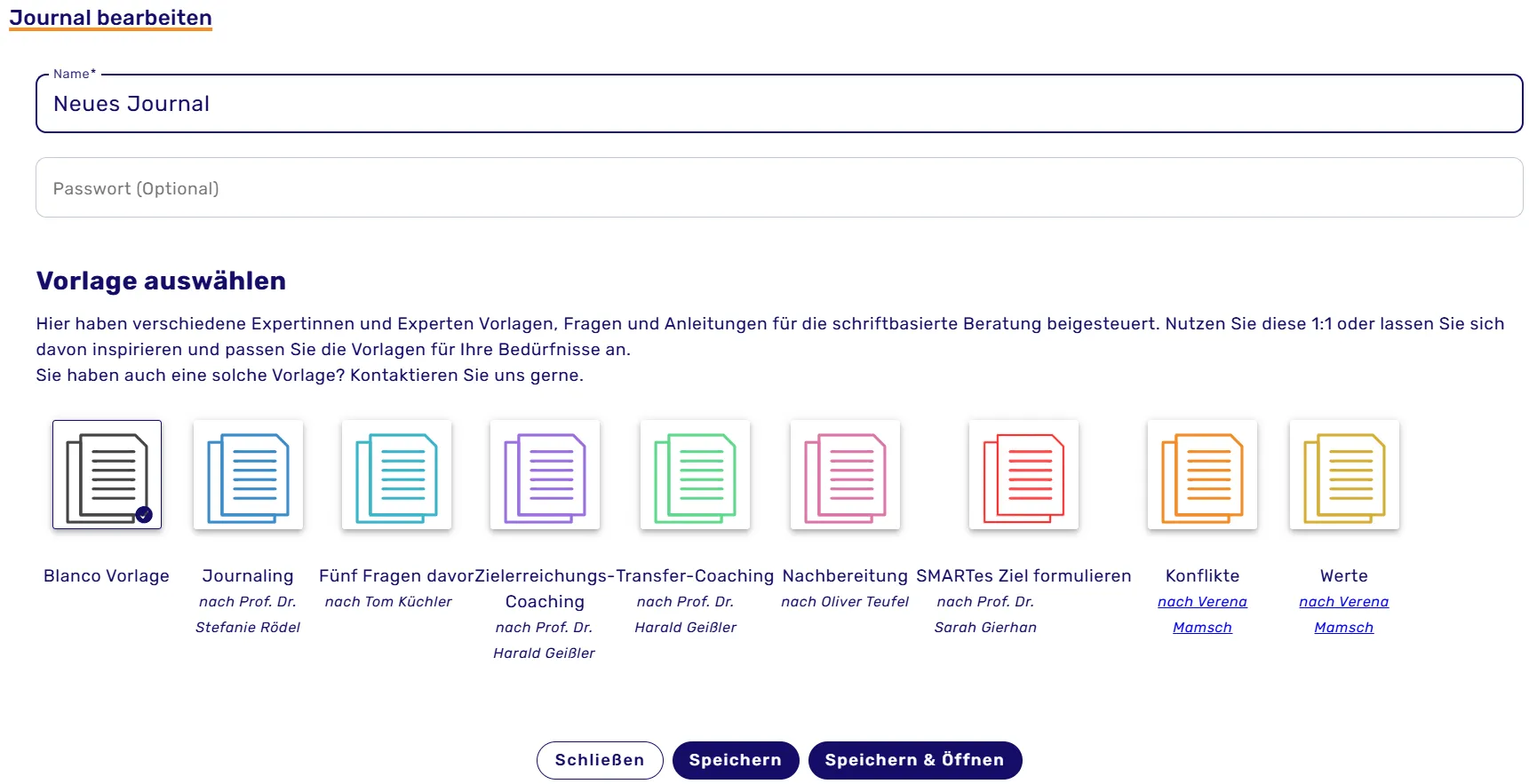
Conflict Coaching by Verena Mamsch
and
Values Coaching by Verena Mamsch
Both materials accompany a coaching process with concrete questions and reflection steps. They can be worked on together in a session or used to continue the reflection between two coaching appointments.
At this point, a heartfelt thank you goes to Verena Mamsch of values move for the extensive, excellent materials and for allowing us to make them available in coachingspace.
Coaching journals as a structured space for reflection
A coaching journal is not simply a digital diary.
It can be a structured method that guides clients through a reflection process.
Questions are not just asked spontaneously in conversation and possibly forgotten afterwards. They remain part of the coaching process and can be worked through calmly.
That is especially helpful with complex topics.
A conflict, for example, can rarely be fully understood with a single question. It can be necessary to look separately at the people involved, the interests, values, needs, the history so far and one's own contribution to the dynamic.
Values work also often takes time.
Your three most important personal values do not necessarily appear spontaneously in answer to the question:
"What are your values?"
Some insights only develop through observation and reflection between sessions.
Journals can create a structured space for exactly that.
Journal 1: Conflict Coaching by Verena Mamsch
Conflicts often arise in situations where the concerns or interests of two parties seem incompatible.
In the conflict itself, however, our attention often focuses on only part of what is happening.
Some people concentrate strongly on the facts:
"It's simply about the agreement not being kept."
Others mainly experience the emotional level:
"It hurts me how I was treated."
For a differentiated clarification of the conflict, it can help to look at both the factual and the emotional aspects.
For this, the new conflict coaching journal offers an extensive checklist for analyzing and working through conflict-laden relationships.
Its design draws on approaches by Marshall Rosenberg, the Harvard method of principled negotiation and the Thomas-Kilmann Conflict Mode Instrument, among others.
From positions to interests
A central idea of conflict work is:
Do not just look at positions. Understand the interests behind them.
For example, one position might be:
"I want to work from home three days a week."
The counter-position is:
"I want you in the office at least four days."
If the discussion stays solely on the level of positions, only one question seems possible:
Who prevails?
It gets more interesting when the underlying interests are examined.
On one side it may be about focused work and balancing job and family.
On the other side it may be about availability, collaboration and informal exchange in the team.
The positions remain different at first.
But once the interests become visible, new options for a solution can emerge.
This is exactly the shift of perspective the conflict journal supports.
1. First, understand the conflict
The first step is to describe the conflict in as much detail as possible.
Who are the parties to the conflict?
Which interests are perceived as opposing or incompatible?
Which values and ethical principles are connected with the respective positions?
Which basic needs might stand behind these interests?
And one especially interesting question:
What are the positive aspects of the conflict?
This question can be irritating at first.
But conflicts can contain important information.
They can point to unclear responsibilities.
Make different expectations visible.
Reveal hidden interests.
Or show that a previous solution no longer works.
The conflict is then not just a disturbance.
It can also be a sign that development has become necessary.
2. Look at the history of the conflict
Conflicts do not always arise in a single moment.
Some develop over weeks, months or even years.
The journal therefore invites you to look more closely at the course so far.
When did the conflict begin?
Was there a concrete triggering situation?
Is there a fundamental problem behind it?
What were the distinct phases?
When did things escalate?
When did the situation calm down?
Such a conflict history can reveal patterns.
Maybe the conflict escalates whenever certain decisions are made.
Maybe there are phases of apparent calm in which the real issues nevertheless remain unresolved.
Maybe it becomes clear that a current trigger is only the latest expression of a much older conflict.
3. Who is really involved?
It is not always only the people who argue openly who are involved.
The journal therefore also distinguishes between people "on stage" and people "behind the stage".
Who is directly involved?
Who influences the conflict indirectly?
Who supports one side?
Who benefits from a certain situation?
Who exerts influence without appearing openly?
Especially in teams and organizations, this question can be decisive.
A conflict between two people can be part of a larger organizational dynamic.
4. Check tasks and responsibilities
Another look goes to the formal roles of those involved.
To what extent is the conflict connected with tasks and responsibilities?
Are responsibilities clear?
Are there contradictory expectations?
Do people take responsibility for areas they are not formally in charge of?
Or do tasks fall through the cracks because no one is clearly responsible?
Some relationship conflicts have a structural cause.
Then it may not be enough to work only on the communication between two people.
5. What keeps the conflict alive?
An especially interesting question in the journal is:
Who has which advantage or disadvantage if the conflict remains unresolved?
This does not mean the parties deliberately keep a conflict going.
But even problematic situations can fulfill functions.
An unresolved conflict can, for example, prevent a difficult decision.
It can keep responsibilities unclear.
It can strengthen belonging within a group.
Or distract from another problem.
This leads to an unusual follow-up question:
What if the conflict did not exist? Who would then be missing something important?
Questions like this can open new perspectives on seemingly stuck situations.
6. Reflect on your own conflict style
The journal also invites you to look at your own way of dealing with conflicts.
On a scale from 0 to 10:
How strong is my willingness to cooperate?
How strong do I estimate the other side's willingness to cooperate?
How strong is my own assertiveness?
How strongly do I experience the assertiveness of the others?
In addition, two questions enable a change of perspective:
What annoys me about the behavior of the others involved?
And:
What do I suspect annoys others most about my own behavior?
The focus then moves beyond the other side's misbehavior.
Your own contribution to the conflict dynamic becomes visible too.
7. Examine your own contribution to the conflict
One of the strongest questions in conflict work can be:
What could I do, or stop doing, to make the conflict worse?
The question is deliberately phrased in an unusual way.
Because people often know surprisingly precisely which behavior would be guaranteed to make a conflict worse.
Stop listening.
React sarcastically.
Withhold important information.
Raise the issue in front of others.
Ignore agreements.
Withdraw completely.
From these answers, the counter-question can often be derived:
What could I do, or stop doing, to de-escalate the conflict?
This makes your own room for action visible again.
8. Develop options before deciding
In stuck conflicts, people often argue too early about a single solution.
The conflict journal therefore separates options from the later decision for a concrete path.
First, the question is:
Which different possibilities exist at all?
Only then is it examined which option could actually hold.
This separation can help widen the solution space first.
9. Find neutral criteria for a solution
Another idea from the Harvard method is orientation towards evaluation criteria that are as objective or neutral as possible.
The question is:
Which criteria could the parties agree on to evaluate a proposed solution?
These could be, for example:
legal requirements
professional standards
economic conditions
previously agreed rules
transparent quality criteria
or other comprehensible measures.
The solution then depends less on which person can push harder.
10. Make the desired future concrete
What does the situation look like once the conflict is resolved?
Who gains what?
What costs arise?
And an important systemic question:
Does the solution possibly create a new conflict?
A solution is not automatically good just because it ends the current problem.
So it pays to look at the possible consequences.
Finally, it is about developing concrete measures:
What must be done?
What should be avoided in the future?
What is needed so that a new, sustainable situation can actually be lived?
Journal 2: Values Coaching by Verena Mamsch
The second new journal deals with a different fundamental question:
What really matters to me?
Values are standards or principles that we consider valuable, meaningful, important, good or desirable.
They influence our perception.
They shape our attitude.
And they affect which decisions feel right or wrong to us.
Values such as:
freedom
security
autonomy
belonging
loyalty
recognition
health
humor
success
or growth
can be important reference points in life.
But values are not always immediately and consciously accessible.
And sometimes a problem arises precisely because different values come into conflict with each other.
Why values work in coaching?
A values conflict can make decisions considerably harder.
For example, a person wants professional freedom, while at the same time security matters deeply to them.
A leader places great value on loyalty, but also wants to live honesty and transparency.
A person wants to pay more attention to their own health while at the same time attaching high value to performance.
Then the problem is not:
"I don't know what I want."
Rather, perhaps two important values are active at the same time, pulling in different directions.
Values work can help make this dynamic visible.
Working out your three core personal values
One goal of values work is to perceive your own value system more consciously.
The journal first develops a basic understanding of what values are.
Then the client collects personal values.
The recommendation is to work with a manageable selection and then sort the list into four categories:
Always
Often
Rarely
Never
The particular challenge:
In the end, only three values may remain under "Always".
This creates a prioritization.
Because if twenty values are equally important, they offer only limited orientation in difficult decisions.
The question therefore is:
Which three values are truly central for me?
Naming values and living values are not always the same
An especially interesting part of values coaching deals with the congruence of values.
It distinguishes between several levels:
Values we hold inwardly.
Values we claim for ourselves when speaking.
And values that actually show in our actions.
These three levels do not always match.
For example, a person says:
"Health is especially important to me."
But keeps working late into the night.
A leader says:
"Different perspectives matter to me."
But regularly makes important decisions alone.
A person names courage as one of their most important values, yet for years avoids every situation that creates uncertainty.
That does not automatically mean the named values are wrong.
But the differences can open important questions.
How does a value actually show in your actions?
The values journal therefore invites you to compare your own values with your concrete behavior.
If I say that courage or risk-taking matters to me:
Where does that show in my actions?
If I say that different perspectives matter to me:
How often do I actually make sure other viewpoints are heard at length?
Which of my highly rated values are particularly clearly confirmed by my actions?
Which perhaps less so?
And is there behavior that points to a value I have not yet rated as particularly important?
Values work becomes more concrete this way.
A value does not remain just a nice word.
It is checked against lived reality.
What do I get when I live a value?
The journal goes one step further.
For central values, questions like these can be worked on:
What do I get when I live this value?
What am I like when I live this value?
What difference does it make in my life?
What would move me to do something together with another person?
What makes me join a group or organization?
What would make me leave an organization?
And what would move me to stay even though I actually wanted to go?
Such questions help connect values with concrete life decisions and experiences.
Values as a basis for decisions
Once your core values are clearer, they can become a system of orientation.
Facing a career decision, you might ask, for example:
Which option lets me live my most important values more fully?
Which decision might violate one of my core values?
Which values are in tension with each other right now?
Which value gets too little room in my current life?
This is not about deriving decisions mechanically from a list of values.
But values can help you understand why certain options feel coherent and others persistently feel wrong.
Making the three core values visible
To conclude the method, the three central values are once again visualized concretely and ranked.
For this, the values can, for example, be written on cards and arranged.
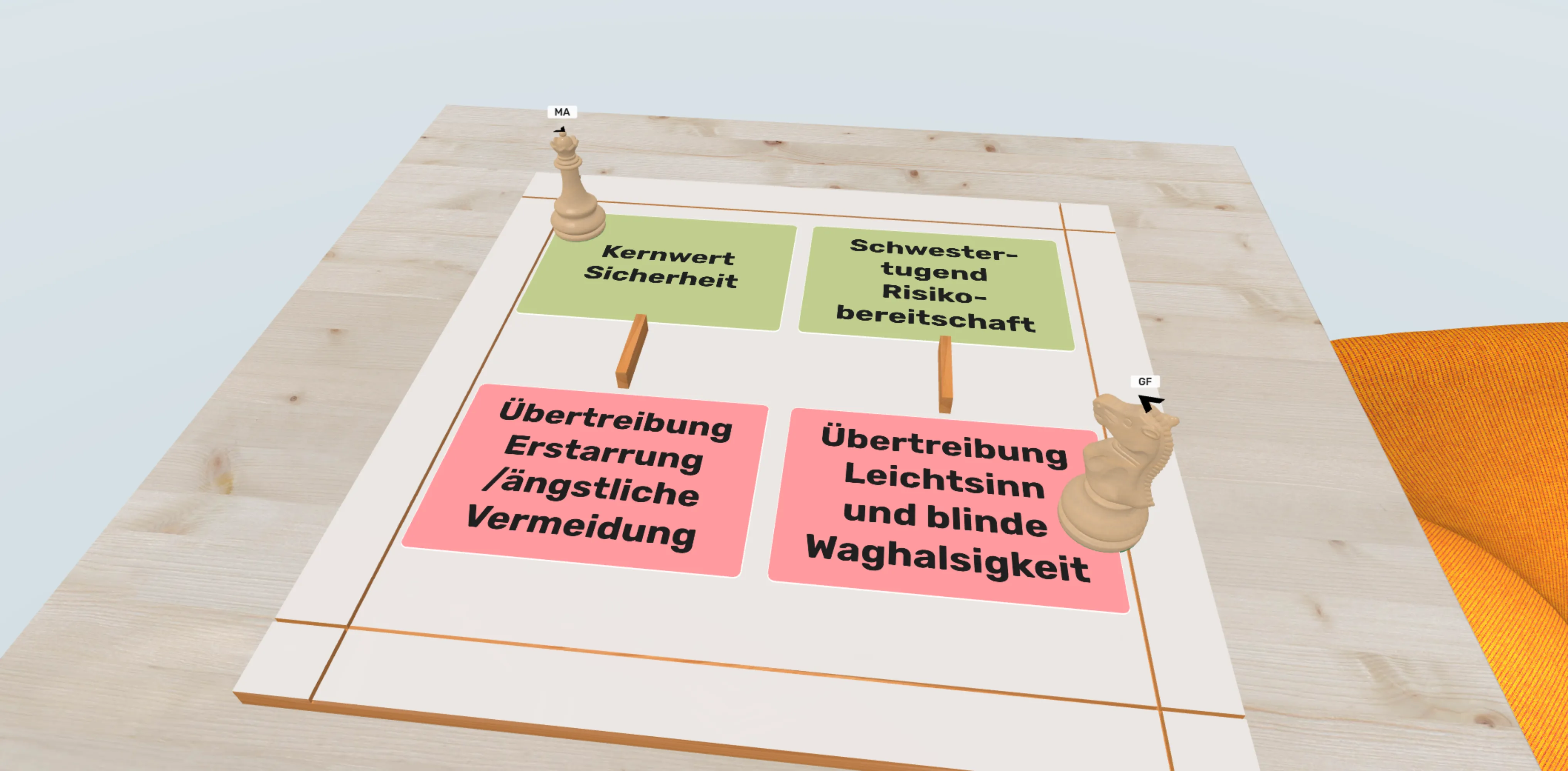
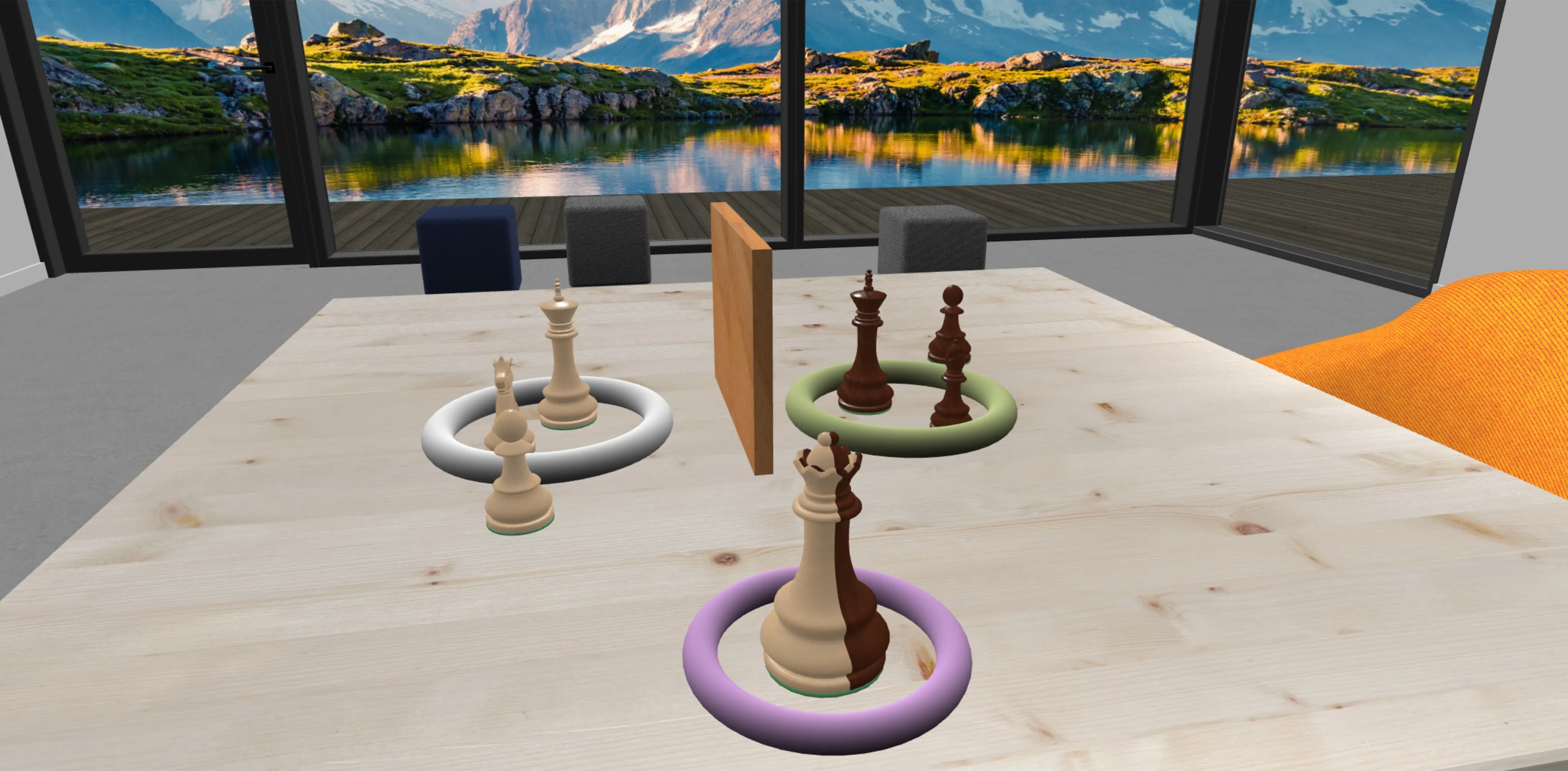
In coachingspace, values work can be combined with other methods, for example a whiteboard or the positioning maps.
A combination with the Palace of Identity is also possible.
The closing question is:
How does my hierarchy of values relate to my current life situation and my coaching concern?
And:
How can my values positively influence my further development process?
Conflicts and values are often connected
The two new journals address different topics.
Yet there is an important connection.
Conflicts often arise where values are touched or violated.
A person seemingly fights over an organizational detail.
Behind it may stand the value fairness.
A leader reacts strongly to lateness.
Behind it may stand reliability.
An employee resists a change.
Maybe it is not only about the change itself but about security.
A colleague reacts sensitively to a decision he was not involved in.
Perhaps autonomy or participation is a central value.
So conflict work can lead to values work.
And values work can help understand conflicts better.
Journals as part of a longer coaching process
Both journals can be used in different ways.
Individual questions can be worked on together in a coaching session.
Certain sections can be reflected on between two appointments.
Results can be picked up again in the next coaching session.
Values work in particular often takes time. Enough room should be planned for thorough work. As a guide, the method suggests a time frame of about one to three hours.
Not every question has to be answered in a single session.
A journal can accompany a process.
The journal does not replace the coach
The extensive questions and checklists can structure a coaching process.
But they do not replace professional process guidance.
A coach can, for example, notice:
Where is a question being avoided?
Which answer triggers strong emotions?
Where does a contradiction appear?
Which new question follows from an answer?
When does it make sense to go deeper?
And when does a topic first need distance?
The journal provides a structure.
The coaching process emerges in the work with the person.
Frequently asked questions about coaching journals for conflicts and values
What is the conflict coaching journal?
The conflict coaching journal by Verena Mamsch is a structured checklist for analyzing and working through conflict-laden relationships. Among other things, it looks at the parties to the conflict, interests, values, needs, the course of the conflict, those involved, conflict styles, your own contribution, and options and criteria for a sustainable solution.
What is the values coaching journal?
The values coaching journal by Verena Mamsch supports you in exploring personal values, prioritizing core values and checking how well your values match your words and your actual actions.
What is the conflict journal suited for?
It can be used in conflict coaching, leadership coaching, team contexts, supervision and with difficult professional or personal relationships, among others.
What is the values journal suited for?
It is particularly suited for decision processes, career orientation, leadership coaching, personal development, and situations where unconscious value conflicts make decisions or actions difficult.
Can the journals be used between two coaching sessions?
Yes. Individual questions or sections can be used for reflection between sessions and then picked up again in the coaching.
Can conflict work and values work be combined?
Yes. Conflicts can point to violated or competing values. Conversely, clarifying personal values can help understand conflicts and difficult decisions better.
Conclusion: good questions extend the effect of coaching
Coaching does not only happen in the session.
A conflict keeps developing in everyday life.
Values show in concrete decisions.
New insights sometimes only appear a few days after a conversation.
The two new journals by Verena Mamsch create structured spaces of reflection for exactly this.
The conflict coaching journal helps analyze a conflict from different perspectives and move from positions to interests, options and sustainable criteria for a solution.
The values coaching journal helps recognize and prioritize personal core values and ask how well your own values are actually lived in everyday life.
Both methods share one central idea:
Do not rush to an answer. First ask the right questions.
Because sometimes that is exactly where change begins.