Anyone who works with genograms knows the moment when the picture is finished and the client looks at her family from a little distance. This view from outside reveals connections that easily get lost in the telling. But it also keeps her in the role of observer: some things she then understands rather than feels. In my new video I show you how to go one step further in coachingspace: you load the genogram into the positioning maps as a custom map and walk through it in the virtual 3D room.
What does it mean to walk a genogram?
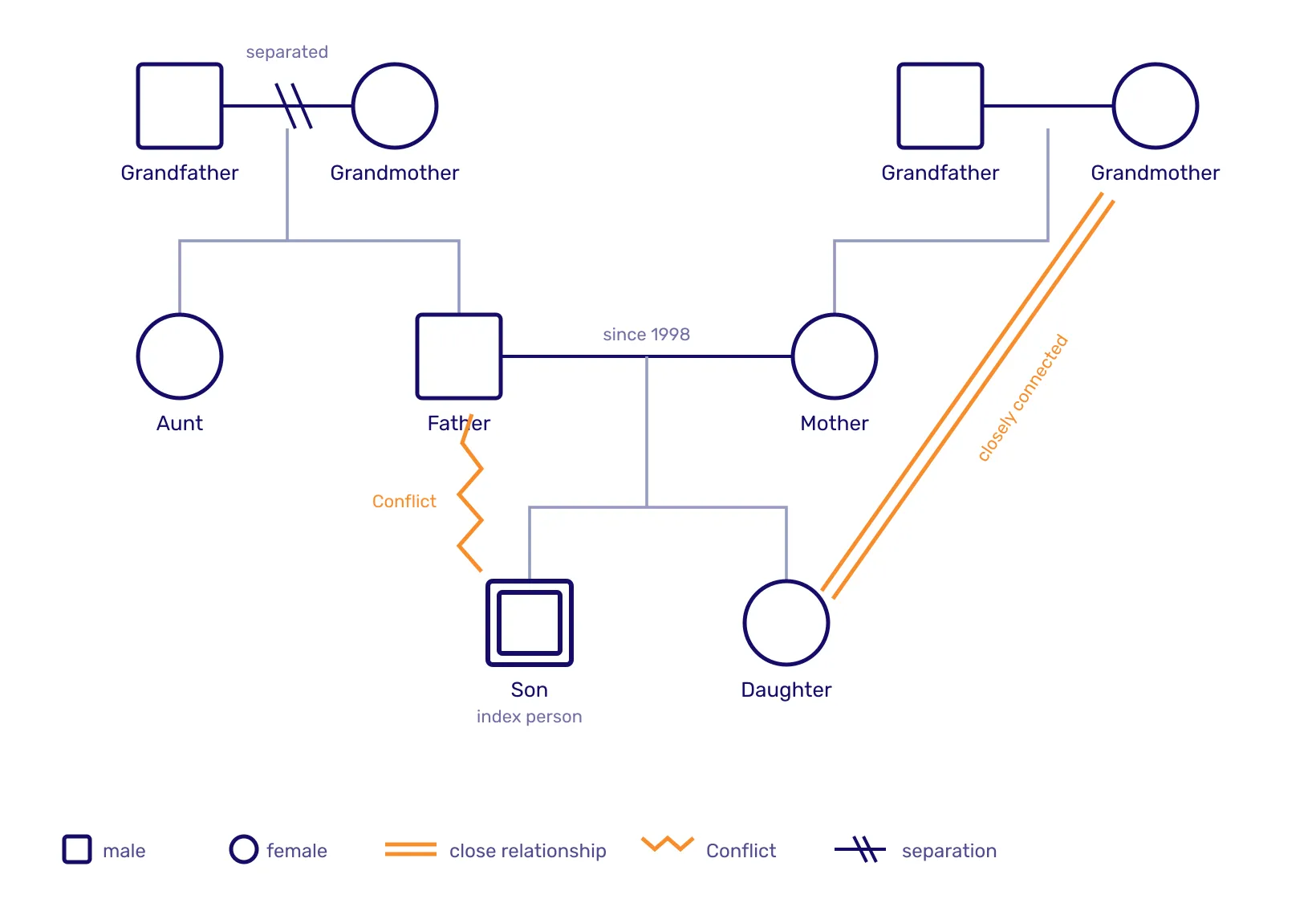
Since Murray Bowen, the genogram has been part of the toolkit of the multigenerational perspective. It shows at a glance where closeness and ruptures lie in a family and which events repeat across generations.
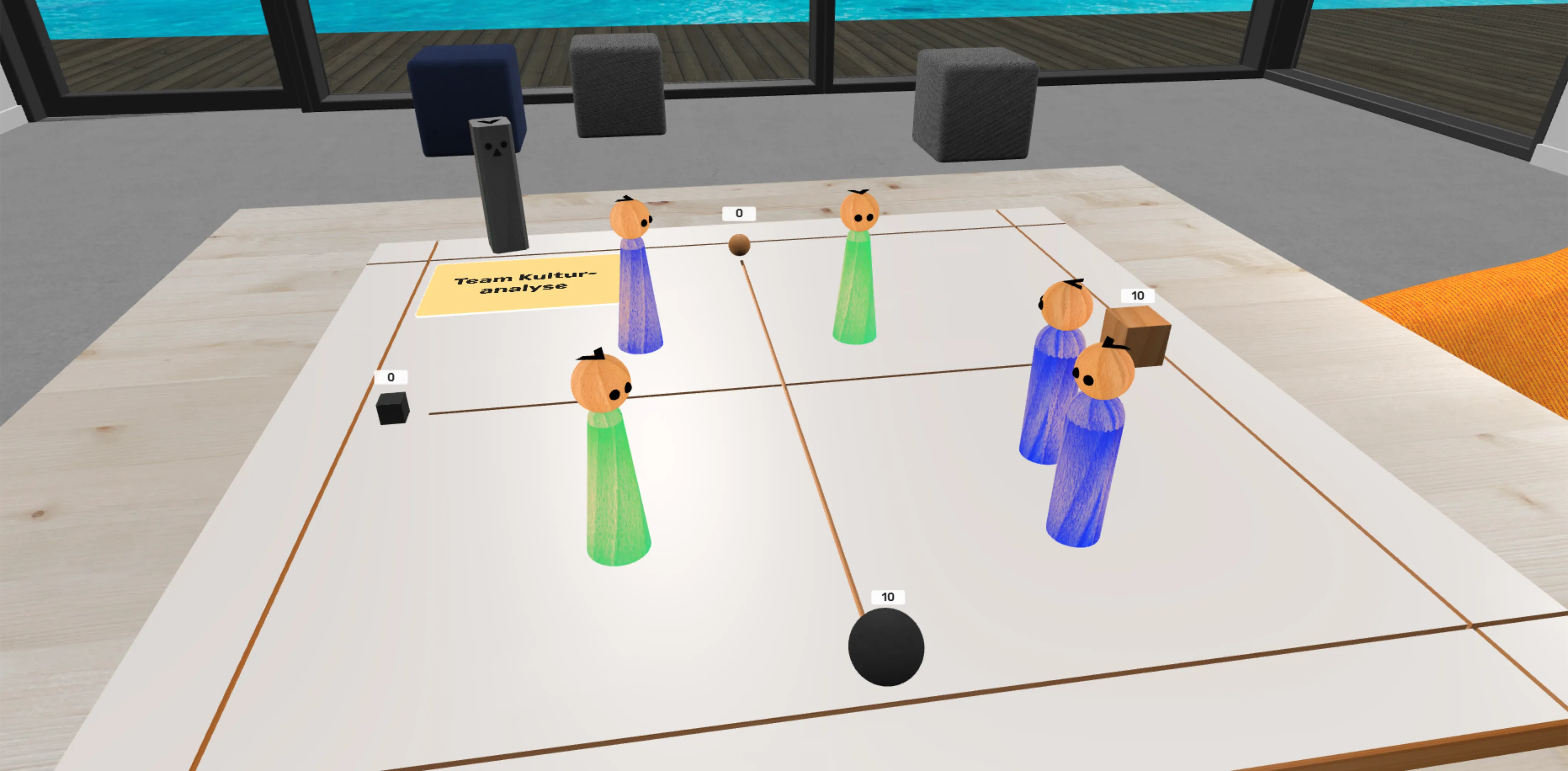
Walking it means placing a second position alongside this overview. When a figure stands on the client’s own symbol in the genogram and she switches to its inside perspective, she looks out at her family from within this figure. She sees who is in her field of vision and who stands more behind her back. In terms of the perceptual positions of John Grinder and Judith DeLozier: her own figure is the first position, the figure of a family member the second, and the view from above onto the whole genogram the third, observing position. A pattern repeated across generations, for instance daughters who time and again took on responsibility for their parents early, can thus be felt from the position of each of these women.
This is possible because the genogram and the positioning maps are on the same platform in coachingspace, with the integrated video conference right alongside. You need both tools for it, that is the package with all tools or the genogram and the positioning maps together as premium tools.
How do you combine the genogram and a positioning map?
The video shows you the whole process on screen in just under two minutes:
The steps in detail:
Create the genogram in the genogram tool of coachingspace, which was created in cooperation with GenoEasy, ideally live with your client.
Download the finished genogram using the export at the bottom right.
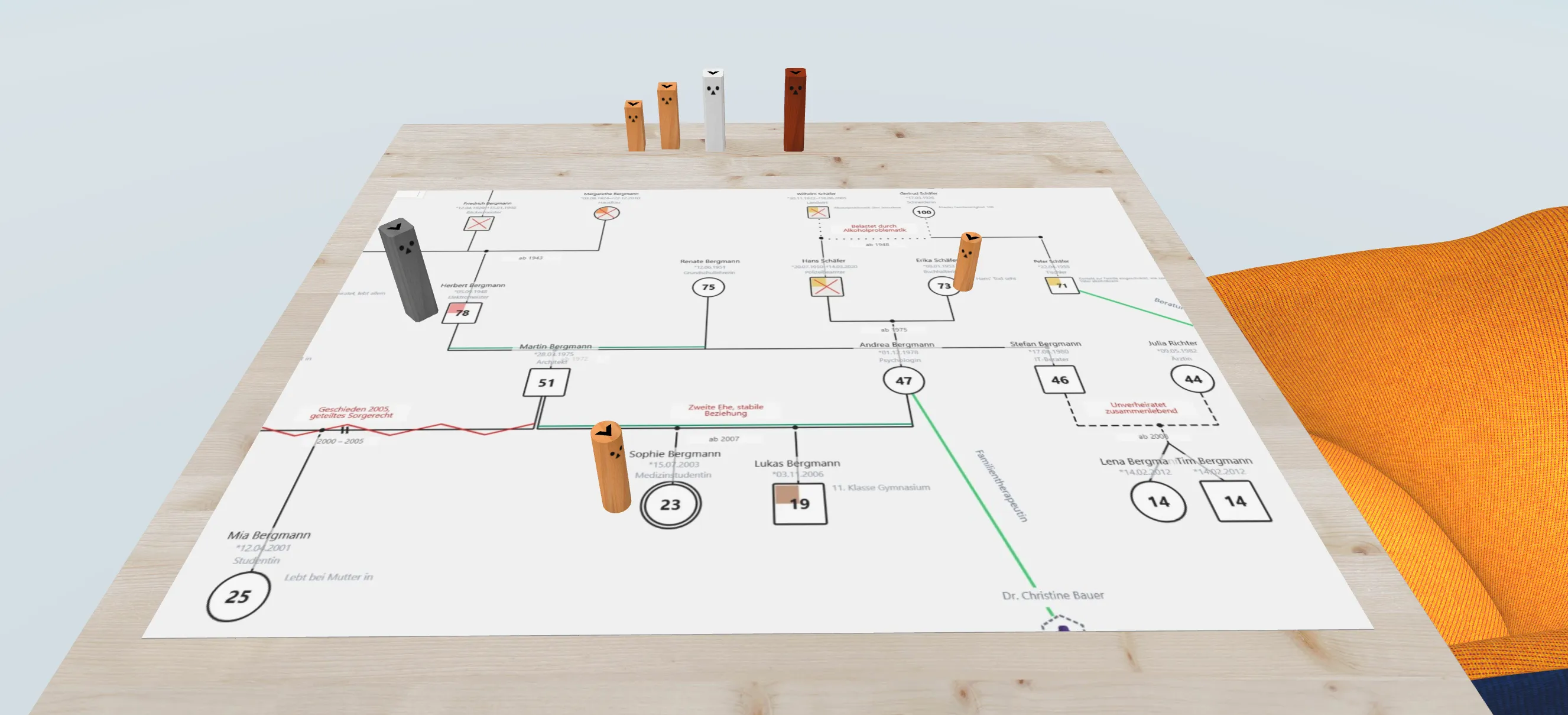
In the positioning maps, create a new map, choose “Custom map”, upload the genogram with the button and choose the 3D version on the table.
Start the map. Your genogram now lies in the room, and the figures are available to you.
Place figures as representatives on the people who matter for the client’s concern, and give each of them a name and a viewing direction.
Switch to the inside perspective of a figure. Your client can step in herself, or you invite her to take on your view with “Share camera view”.
Which questions and method ideas fit?
A calm start is the client’s own place. She places her figure on her symbol, goes into the inside perspective and describes what she sees before anything is interpreted. Questions in the present tense draw her into the scene: “What do you see from here, and whom do you sense behind your back?” If a familiar feeling comes up, it helps to separate this feeling from the current scene: “Where do you know this feeling from, and since when?”
If a repetition stands out in the genogram, the client can walk it. Each person involved gets a figure, and the client goes into their inside perspectives one after another, from the oldest generation down to herself, each time with the question of what this person might have needed in their place. Finally she returns to her own figure, because she can only act from there: “When you look at your grandmother now, what is different from before?”
Missions in the sense of Helm Stierlin’s concept of delegation can also be made visible, for instance with a figure labelled “Hold everything together” next to the person this mission comes from. The size of the figure gets you talking about how much space the mission takes up today and how much it may take up.
An invented but typical example: a client comes with the feeling that she is always the mediator in her family. The genogram makes clear that her mother and her grandmother also stood between quarrelling siblings. In the grandmother’s inside perspective she notices that from there she mainly has the others in view and hardly anyone who looks at her. Back in her own figure she turns the viewing direction a little to the side. This leads to a conversation about what it would mean for her not to step into the middle every time.
What should you watch out for?
Genogram work often touches on painful things, and the inside perspective intensifies the experience even more. That is why walking the genogram belongs in a later session rather than the first meeting, and it needs a clearly agreed contract. What the client perceives from the figure of her late grandfather remains a hypothesis from her own experience, not knowledge about him. If it becomes too much, switching back to the view from outside creates distance, and from there you name together what has emerged. In cases of acute trauma, this work belongs in a therapeutic setting.
A genogram contains sensitive data, including about relatives who were never asked. First names or initials are usually enough for walking it, and it is best to delete the downloaded file as soon as it has been uploaded as a map.
Does this also work in person?
Yes. If you are in the same room as your client, open coachingspace on a laptop or a larger screen and walk through the genogram together. The inside perspective then opens up a view that a genogram on paper does not offer.
Warm regards,
Benjamin